Go to any grocery store or scroll through a marketplace app, and desi ghee isn't just "desi ghee" anymore. There's premium, there's standard, there's the chatee wala jar sitting next to a factory-packed one at nearly double the price. Ask the shopkeeper why, and you'll get an answer that half explains it, and half doesn't. Here's the actual difference. Premium, or chatee wala, ghee is churned by hand in small batches, which eats up more time and more milk per kilo produced — so naturally, it costs more. Standard ghee comes from machine-separated cream, processed at scale. It isn't worse. It's just built for a different kitchen, a different budget, sometimes a different palate.
So which one do you need? That depends on what's actually going in the pot.
What Makes Desi Ghee "Desi" in the First Place
Real desi ghee starts as butter, slow-cooked down from the cream — malai — skimmed off cow or buffalo milk. It's not vegetable oil dressed up with flavoring, though a surprising amount of what's sold cheap in the market is exactly that.
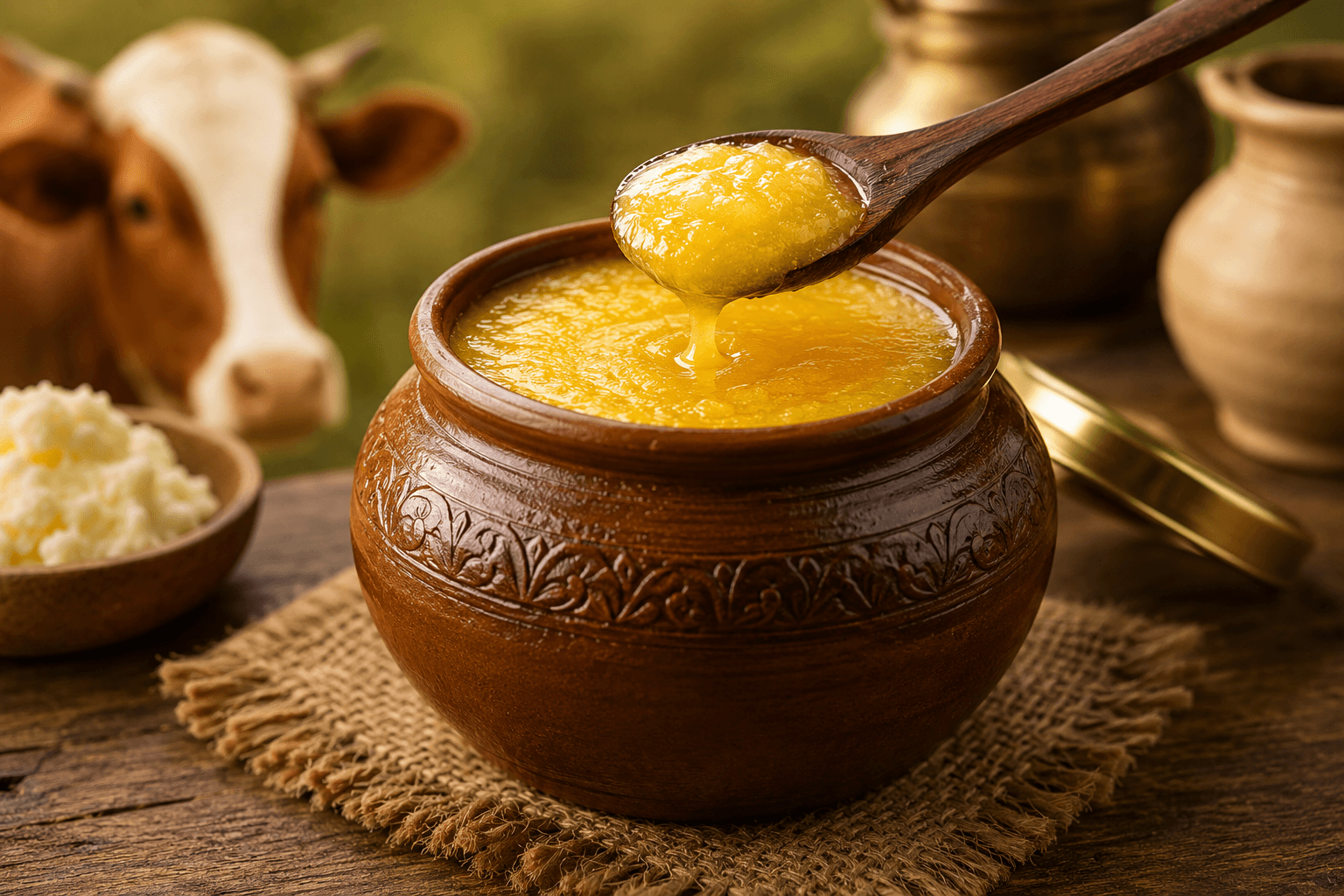
You can usually tell the difference without even tasting it. Pure ghee turns grainy once it cools to room temperature. It smells rich the moment it melts. Vegetable-oil substitutes, by contrast, tend to stay smooth and oddly uniform — almost too consistent, if that makes sense. If a ghee smells flat or feels like shortening, something's probably been mixed in.
Premium vs Standard: What's Actually Different
One decision separates the two categories: is the cream churned by hand, or by machine? Everything else — flavor, texture, price, even how long it keeps — follows from that. Chatee wala ghee is the traditional route. Cream gets churned by hand or with basic tools, then cooked slowly over low heat. It takes longer, uses more milk for the same output, and comes out with a stronger, more distinct flavor. Coarser texture, too. This is roughly what a lot of households used to make at home before it became something you buy instead. Standard ghee skips the hand-churning. Cream gets separated mechanically and processed at a larger scale, which makes it lighter, milder, and — for a lot of people — easier on the stomach. It's also more predictable from batch to batch, since a machine doesn't vary the way a human hand does. Calling one "real" and the other "fake" misses the point. Both are genuine ghee. The difference is method and yield, not authenticity.
Premium (Chatee Wala)
Standard
Made from
Hand-churned cream
Machine-separated cream
Flavor
Strong, traditional
Milder
Texture
Coarser, grainier
Smoother
Price
Higher
Lower
Best for
Traditional cooking, ghee-forward dishes
Daily cooking, lighter dishes
What Actually Affects Desi Ghee Price in Pakistan
A handful of factors move the price up or down, and none of them are random.
Milk source is the big one. Buffalo milk produces richer, higher-fat ghee, and that richness costs more. Cow ghee — desi cow ghee specifically — lands somewhere in the middle: less heavy than buffalo, but still unmistakably traditional in taste. Then there's the production method itself, which we've already covered — hand-churned costs more because it simply takes more milk and more labor for less output. Season plays a role too, though people don't always think about it. Milk supply shifts through the year, and ghee prices tend to move with it. Tighter supply, higher rate — it's not complicated, just easy to forget. Location matters as well. A kilo in Lahore isn't priced identically to one in Karachi or a smaller town, since local milk supply and demand shift things slightly from city to city. You can compare current listings and sellers for desi ghee prices in Pakistan to get a sense of where rates stand right now. And then, quantity. Buying 5 or 10 kilos at once almost always works out cheaper per kilo than picking up small jars one at a time. One thing worth flagging: if you see "pure desi ghee" priced well below everything else around it, that's a reason to slow down, not celebrate. Real ghee has real costs behind it. A price that low usually means something's been cut somewhere.
How to Tell If You're Getting Real Desi Ghee
Three quick checks, and you'll know within a minute of opening the jar.
Smell it first. Genuine ghee has a nutty, slightly sweet aroma — distinct, not flat. If it smells like plain cooking oil, that's already a red flag. Then watch how it melts. Pure ghee turns into a clear, golden liquid. If it goes cloudy or stays thick, something else has likely been added. Finally, check the texture once it's back at room temperature. It should look grainy — not smooth and uniform like vegetable shortening. One more thing, and it's less about the ghee itself: sellers who can actually tell you where the milk came from and how the ghee was made tend to be more reliable than ones who can't, or won't.
Which One Should You Actually Buy?
If the ghee is doing the heavy lifting in the dish — parathas, halwa, anything where that traditional aroma is the point — premium chatee wala earns its price. For everyday cooking, a daily tadka, lighter meals, standard ghee handles it fine without costing as much. Plenty of households just keep both on hand. Standard for the everyday stuff, premium for the dishes where people would actually notice the difference.
Frequently Asked Questions
What's the difference between premium and standard desi ghee? Premium (chatee wala) ghee is hand-churned from cream and has a stronger flavor, while standard ghee is machine-processed, milder, and generally more affordable.
Why does desi ghee price vary so much in Pakistan? Price depends on the milk source (buffalo vs. cow), production method, season, location, and quantity purchased. Hand-churned, small-batch ghee always costs more than mass-produced ghee. How can I check if desi ghee is pure? Look at texture (should be grainy at room temperature), smell (nutty, not flat), and how it melts (clear golden liquid, not cloudy). Buying from a transparent, traceable source also helps. Is desi cow ghee different from buffalo ghee? Yes. Buffalo ghee is richer and higher in fat, while cow ghee is lighter and considered easier to digest by many people.
Final Thoughts
Premium and standard desi ghee were never really a "better vs worse" argument — they solve for different things. Once you know what separates them, the choice comes down to your cooking, not the number on the price tag.
For more guides like this, visit Mannddi.