Reviewed using insights from livestock sellers and mandi buyers across Pakistan. Anyone who has walked through a livestock mandi in Pakistan knows that buying a dumba is never as straightforward as it looks. One seller tells you it's the best animal in the market, another quotes a completely different price for what looks like the same size, and by the end of it, most buyers are left guessing whether they actually got a fair deal. This confusion is exactly why so many people overpay, or worse, walk away with an animal that isn't as healthy as it appeared. This guide breaks down what actually decides a dumba bakra's price, what to look for physically, and how buyers today are avoiding the whole guessing game altogether.
Dumba and Bakra: Clearing Up the Confusion
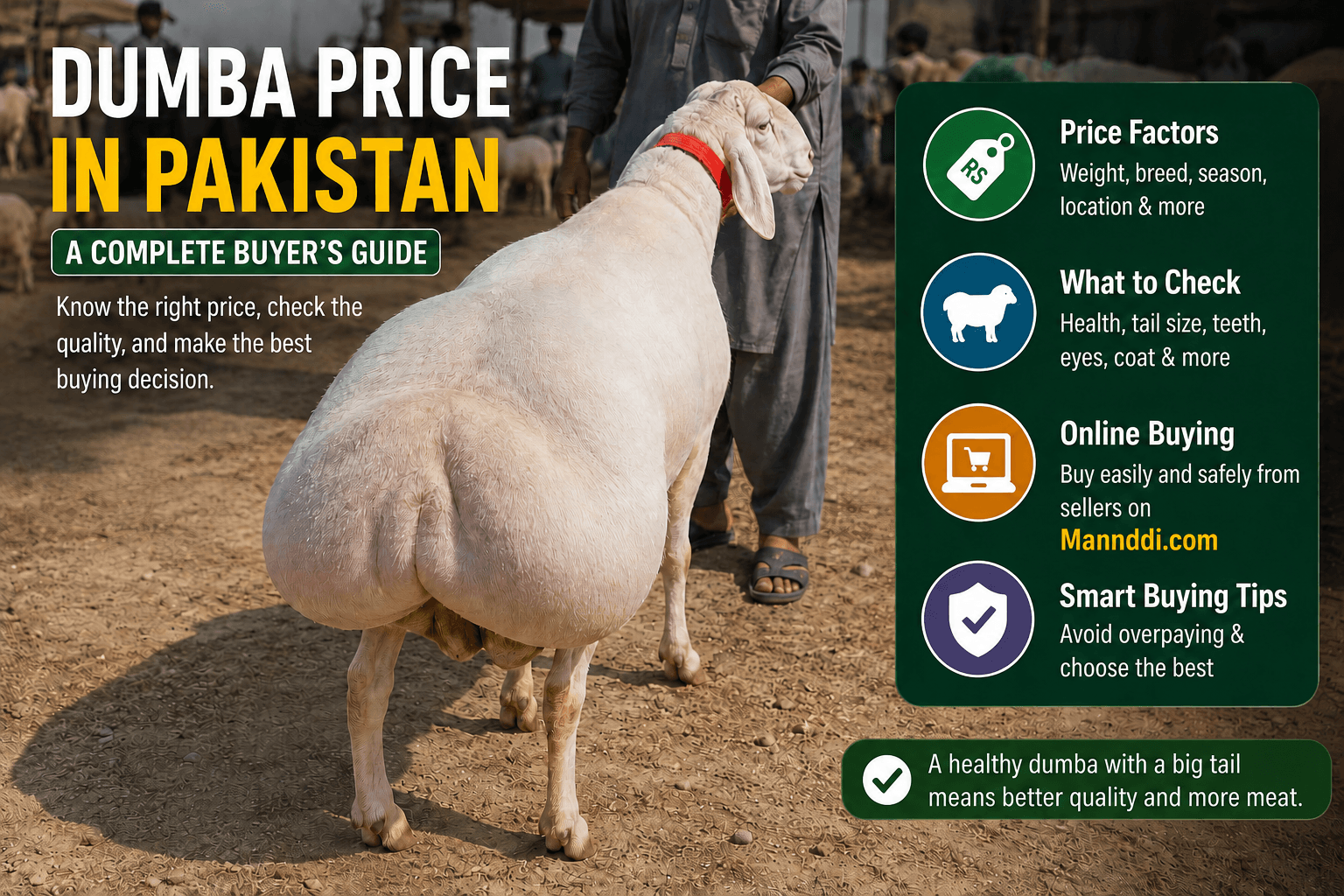
Before anything else, it helps to separate two terms people often use interchangeably. A dumba is a specific breed of sheep known for its large, fat-storing tail, while a bakra refers to a goat, a different species entirely. In everyday conversation, especially around Eid-ul-Adha, people mix the two because buyers are often comparing both options side by side before making a decision. Dumba is popular mainly because of its size and meat yield. Its tail alone stores a significant amount of fat, which many buyers specifically look for, and its meat has a distinct taste and texture that some households prefer over goat meat. If you're comparing a dumba against other sheep options before deciding, browsing verified listings side by side makes the decision a lot easier.
What Actually Decides the Price
There is no fixed rate card for dumba prices in Pakistan, and rates shift constantly depending on market conditions, so it's best to check current listings rather than rely on a fixed number. Instead, the final price is shaped by a combination of factors:
- Weight and size — This is the most obvious factor. Heavier animals cost more, plain and simple. Most sellers price per kilogram of live weight, though the final number is often negotiated on the spot.
- Breed — Certain breeds are known for faster growth, better meat quality, or larger tail size, and these command a premium over generic or mixed-breed animals.
- Season — Prices rise sharply as Eid-ul-Adha approaches, sometimes by a significant margin compared to off-season rates. Buyers who purchase a few weeks or months in advance typically get noticeably better prices than those buying in the final days.
- City and location — Rates vary from city to city depending on local demand, transport costs, and how many sellers are active in that market. Prices in major cities tend to run higher than in smaller towns simply due to demand pressure.
- Health and physical condition — Two animals of the same weight can have very different prices if one looks visibly healthier, better fed, and better maintained than the other. This is one of the main reasons buyers are shifting toward checking a dumba animal listing's photos and details online before ever negotiating a price in person.
A useful rule of thumb: if a price looks unusually low compared to everything else in the market, don't assume it's a bargain. Ask about the animal's age, feeding history, and health before anything else.
How to Check a Dumba Before You Pay
Size alone tells you very little. A large animal can still be underweight for its frame, poorly fed, or dealing with a health issue that isn't obvious at first glance. Here's what actually matters when you're standing in front of the animal.
- Tail size: A fuller, heavier tail is one of the strongest indicators of good fat content and overall quality.
- Eyes and nose: Clear, bright eyes and a dry nose usually point to a healthy animal. Watery eyes or a runny nose are warning signs worth taking seriously.
- Movement: Watch the animal walk. Smooth, confident movement without limping suggests healthy legs and joints.
- Coat condition: A shiny, dense coat is a good sign. Dull, patchy, or rough fur can point to poor nutrition or an underlying issue.
- Teeth: Checking the teeth is the most reliable way to estimate age. Worn-down or unusually developed teeth can reveal that an animal is older than the seller claims.
It also helps to simply ask the seller what the animal has been fed on. Naturally grass-fed animals raised over a proper time period tend to be noticeably better quality than ones that were rapidly fattened just before the season.
Buying Online vs. Buying at the Mandi
Physically visiting a mandi is still the traditional route, but it isn't the only one anymore. Online platforms now let buyers browse verified sellers, compare weight and pricing details, and view photos before ever stepping into a market. This approach works particularly well for buyers who don't have time to travel to a mandi, or who would rather deal with a verified seller than take a chance with an unfamiliar one in person. Whether you're specifically searching for a dumba for sale in Lahore, Karachi, or any other city, having everything laid out upfront makes comparing multiple sellers far easier than negotiating animal by animal on the spot.
Final Thoughts
Buying a dumba is not just a transaction; it directly affects the value, quality, and overall experience you get in return, whether the purpose is qurbani or just stocking up on meat for the household. Taking a little extra time to inspect the animal properly, understanding what drives the price, and bringing along someone experienced with livestock if possible can make the difference between a good purchase and a regretful one. A carefully checked dumba almost always turns out to be the better deal in the long run, even if it costs slightly more upfront. Once you've picked the right animal, the process doesn't have to stop there. Many buyers now prefer to book a qasai online as well, so the entire qurbani process, from choosing the dumba to getting it professionally slaughtered and prepared, is handled without the usual last-minute rush.
Frequently Asked Questions
What is the average price of a dumba in Pakistan? Prices vary widely based on weight, breed, season, and city, but they typically rise significantly in the weeks leading up to Eid-ul-Adha compared to the rest of the year. Is dumba more expensive than a regular bakra? Generally yes, since dumba tends to have higher meat yield and additional fat content in the tail, which pushes the price above a standard goat of similar size. What is the best time to buy a dumba for a better price? Buying a few weeks or months before Eid-ul-Adha typically gets better rates than buying during peak demand right before the holiday. Can I buy a dumba online instead of visiting a mandi? Yes, several online marketplaces now allow buyers to browse verified sellers, compare pricing and weight details, and arrange purchases without visiting a physical mandi.