Reviewed by Dr. Abdul Rehman (D.V.M, M.Phil – UVAS), dairy farm consultant and nutritionist.
A kid that looked fine last week and can barely stand this week — that's one of the more unsettling things a goat owner runs into. No injury, no obvious cause. In cases like this, white muscle disease is usually near the top of the list to rule out. Most new farmers haven't even heard of it, but in areas where soil selenium is low, it comes up more often than people expect. Below: what causes it, how to spot it early, and what actually works to prevent it.
What Is White Muscle Disease in Goats?
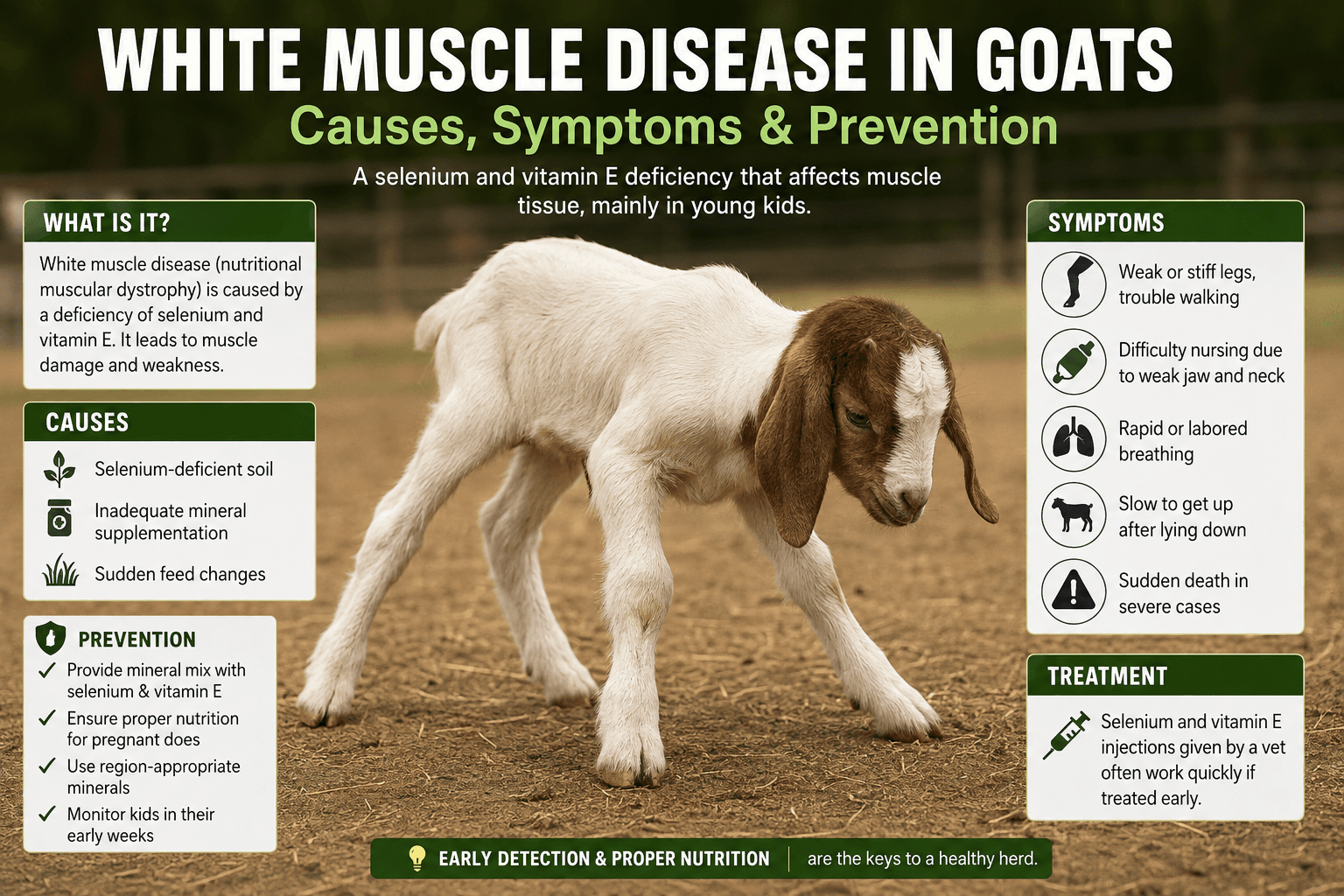
White muscle disease — also called nutritional muscular dystrophy — comes from a diet that doesn't have enough selenium and vitamin E. These two work together to protect muscle tissue from damage. Take them away, and muscle fibers start breaking down. That's actually where the name comes from: the affected tissue turns pale, almost white.
Young kids get hit hardest. Adult goats can develop it too, though usually in a milder form. And it tends to cluster in regions where the soil is naturally low in selenium — which means, more often than not, the problem started before the kid was even born, with whatever the doe was eating during pregnancy.
Symptoms to Watch For
Some cases are obvious. Others are easy to miss, depending on how far along the deficiency is by the time someone notices.
- Weak or stiff legs. The kid struggles to stand or walk — gait looks wobbly, sometimes stiff.
- Trouble nursing. Weak jaw and neck muscles get in the way of nursing, and that just adds to the weakness.
- Rapid or labored breathing. In worse cases, it's not just the limbs — the heart and respiratory muscles are involved too.
- Slow to get up. Takes longer than usual to rise after lying down.
- Sudden death, in severe cases. If the heart muscle is badly affected, there may be little to no warning. This is exactly why catching it early matters so much.
A mild case can look like nothing more than a slow-starting kid. But if more than one kid in the herd is showing this around the same age, that's usually a sign of a mineral deficiency, not just bad luck.
What Causes It
It almost always traces back to diet — either what the doe ate during pregnancy, or what the herd has access to overall.
- Selenium-deficient soil. Some regions just don't have much selenium in the ground, so anything grown there is deficient — no matter how well the herd is otherwise cared for.
- Not enough mineral supplementation. Herds that rely on pasture alone, without added minerals, are at more risk — especially during pregnancy, when a doe needs more.
- Sudden feed changes. Switching from stored winter feed to fresh spring pasture can sometimes tip a borderline-deficient kid over into symptoms.
How It's Diagnosed and Treated
Diagnosis usually comes down to symptoms, the animal's age, and blood or tissue testing where that's available. Treatment is selenium and vitamin E injections — and it often works fast. Some kids show improvement within a day or two.
One thing worth being careful about: don't try to self-diagnose or self-treat this. Selenium has a narrow safety margin — too much can do about as much damage as too little. Get a vet involved before starting treatment. If you don't already have one, Mannddi's expert advice section can connect you with vets who can guide the diagnosis and dosing properly.
Prevention Matters More Than Treatment
Since it's almost entirely diet-driven, preventing it is a lot more manageable than treating it after the fact.
- Make sure pregnant does are getting proper mineral supplementation — especially in areas known for low-selenium soil.
- Use a mineral mix formulated for your specific region, not a generic one. Selenium needs vary a lot by location. Mannddi's animal food store has region-appropriate options if you want to browse.
- Watch kids closely in their first few weeks, particularly if the herd has had this before.
- If it's shown up before, work with a vet to test soil or feed selenium levels.
Once a farmer's dealt with a case, they tend to pay a lot more attention to mineral supplementation afterward. Makes sense — the gap between "preventable" and "emergency" usually comes down to feed decisions made months in advance.
Frequently Asked Questions
What causes white muscle disease in goats? It's caused by a deficiency of selenium and vitamin E, usually tied to selenium-poor soil or inadequate mineral supplementation during pregnancy. Which goats are most at risk? Young kids are most commonly affected, particularly in regions with selenium-deficient soil, though adult goats can occasionally develop milder cases. Can white muscle disease be treated? Yes. Selenium and vitamin E injections given by a vet are the standard treatment, and many kids improve quickly when it's caught early. How can white muscle disease be prevented? Proper mineral supplementation for pregnant does, region-appropriate feed, and close monitoring of kids in their first few weeks are the most effective preventive steps.
Final Thoughts
White muscle disease is easy to prevent, but it can move fast if you miss it. Keep an eye on new kids, get a vet's input on mineral supplementation, and act quickly if something looks off — that's really the whole game, whether you're running a small herd or buying from sellers on Mannddi's animal marketplace who know what a healthy kid looks like before it's ever listed. For more livestock health guides, feed options, and trusted local services, visit Mannddi.